Key takeaways
- Dengue usually starts with sudden high fever, severe body and joint pain, headache, pain behind the eyes and sometimes a rash.
- The most dangerous period is often when the fever settles (around days 3–7) — this is when warning signs must be watched closely.
- NS1 antigen testing works best in the first five days of fever; IgM antibodies are more useful from about day five.
- Use paracetamol for fever. Avoid ibuprofen, aspirin and other NSAIDs when dengue is possible.
- Severe abdominal pain, persistent vomiting, bleeding, drowsiness or very little urine need hospital care immediately.
Why dengue matters so much in Kolkata
Every monsoon and post-monsoon season, dengue becomes one of the most common reasons people in Kolkata visit a doctor. The Aedes aegypti mosquito that spreads it breeds in small collections of clean, stagnant water — flower-pot trays, water tanks, discarded containers, construction sites and rooftop drums — all of which are common in a dense, humid city.
West Bengal has repeatedly reported some of the highest dengue numbers in India. Nationally, official reported cases have risen sharply over the last five years, and because many mild cases are never tested, the true number of infections is certainly higher than the reported figures.
View data table
| Year | Reported cases |
|---|---|
| 2019 | 1,57,315 |
| 2020 | 44,585 |
| 2021 | 1,93,245 |
| 2022 | 2,33,251 |
| 2023 | 2,89,235 |
Dengue symptoms: what to expect, day by day
Dengue is a viral infection. After the bite of an infected mosquito, symptoms usually begin within 4 to 10 days. The illness classically moves through three phases:
- Febrile phase (about days 1–3): sudden high fever, often 39–40 °C, with severe headache, pain behind the eyes, muscle and joint pain (which is why dengue is called “break-bone fever”), loss of appetite, nausea and sometimes a flushed skin or rash.
- Critical phase (around days 3–7): the fever often comes down — and many people wrongly assume they are recovering. In a minority of patients, blood vessels become “leaky” during this period, fluid moves out of the circulation, and blood pressure can fall. This is when warning signs appear.
- Recovery phase: fluid returns to the circulation, appetite improves, and an itchy rash may appear on the hands and feet. Tiredness can last for a couple of weeks.
View data table
| Item | When |
|---|---|
| Febrile phase | Day 1–3 |
| Critical phase (watch closely) | Day 3–7 (often as fever falls) |
| Recovery phase | Day 7–10 |
| NS1 antigen test | Day 1–5 |
| IgM antibody test | Day 5–10 |
Warning signs: when dengue becomes an emergency
Most people with dengue recover with rest, fluids and careful monitoring at home. But a small proportion develop severe dengue, which can be life-threatening if it is not treated quickly. The World Health Organization lists clear warning signs. If any of these appear — especially as the fever is settling — the patient should be taken to hospital without delay:
Go to hospital immediately if you notice
- Severe or persistent abdominal pain
- Vomiting that does not stop, or inability to keep fluids down
- Bleeding from the gums or nose, blood in vomit or stools, or black stools
- Restlessness, drowsiness or confusion
- Cold, clammy skin or fainting
- Passing very little urine
- Fast breathing or difficulty breathing
Which test, and when? NS1, IgM and the platelet count
The right test depends on the day of illness:
- Dengue NS1 antigen detects a viral protein and is most useful in roughly the first five days of fever.
- Dengue IgM antibody is the body’s immune response and usually becomes detectable from about day five onwards.
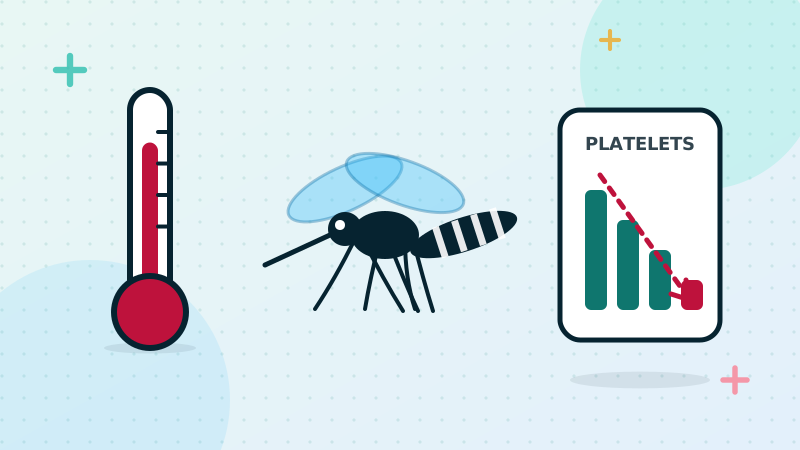
- Complete blood count (CBC) — including platelets, white cells and haematocrit — is repeated during the illness. A rising haematocrit together with a falling platelet count is an important signal that the critical phase may be developing.
A negative NS1 test on day six or seven does not rule dengue out, and a positive test early does not by itself predict how severe the illness will be. This is why testing should be interpreted by a physician alongside the clinical picture.
The platelet count: important, but not the whole story
Few numbers cause as much anxiety in Kolkata households as the dengue platelet count. Platelets often fall during dengue and usually recover on their own. A low count alone is not a reason to panic, and platelet transfusions are not routinely needed — guidelines generally reserve them for patients with significant bleeding or very low counts in specific situations.
What matters more is the overall picture: hydration, blood pressure, haematocrit, urine output and warning signs. Many patients with severe dengue are harmed by fluid loss from the blood vessels, not by the platelet number itself.
Treatment: what helps and what to avoid
There is no specific antiviral medicine for dengue. Treatment is supportive and focuses on keeping the patient safe through the critical phase:
- Rest and fluids: oral rehydration solution, water, soups, coconut water and juices, unless a doctor advises otherwise.
- Paracetamol for fever and pain, in the dose advised by your doctor.
- Avoid NSAIDs such as ibuprofen, diclofenac, naproxen and aspirin — they can increase the risk of bleeding.
- Avoid unnecessary injections and antibiotics; dengue is viral.
- Daily monitoring of symptoms, and blood counts as advised.
Papaya-leaf extract and other home remedies are widely discussed on social media. Evidence for them is limited; they should never replace medical assessment or delay hospital care when warning signs appear.
Who is at higher risk of severe dengue?
Anyone can develop severe dengue, but the risk is higher in infants, pregnant women, older adults, people with diabetes, high blood pressure, heart or kidney disease, obesity, and people who have had dengue before (a second infection with a different dengue type can be more severe). These patients should be seen by a doctor early and monitored more closely.
Preventing dengue at home in Kolkata
- Empty and scrub water containers, coolers and flower-pot trays at least once a week.
- Keep water tanks and drums tightly covered.
- Dispose of old tyres, coconut shells and plastic containers that collect rainwater.
- Use mosquito repellents, nets and window screens — Aedes mosquitoes bite mostly during the day.
- Wear full-sleeved clothing during peak season.
| Myth | Fact |
|---|---|
| Once the fever goes, dengue is over | The days around the fall in fever are often the most dangerous; keep watching for warning signs |
| Everyone with dengue needs platelet transfusion | Most patients never need platelets; transfusion is reserved for specific situations such as significant bleeding |
| Antibiotics speed up recovery | Dengue is viral; antibiotics do not help unless there is a separate bacterial infection |
| Dengue spreads from person to person | It spreads through the bite of an infected Aedes mosquito, not by touch or air |
When to see a physician
See a doctor if fever lasts more than two days, if it comes with severe body pain or rash, or if the patient is elderly, pregnant or has long-term illnesses. Dr. Dhiman Sen — MD, DTM&H (Diploma in Tropical Medicine & Hygiene), MRCP (London), FRCP (Edinburgh) — has treated fevers and tropical infections in Kolkata for 50 years and can guide testing, home care and the decision about hospital admission.
Frequently asked questions
How many days does dengue fever last?
The fever usually lasts about 2 to 7 days. Many people feel tired for one to two weeks afterwards. The days around when the fever settles (often days 3–7) need the closest watch for warning signs.
What platelet count is dangerous in dengue?
There is no single number that applies to everyone. Platelets often fall in dengue and recover on their own. Bleeding, warning signs, a rising haematocrit and the overall clinical condition matter more than the platelet count alone. Your doctor will decide on monitoring and any need for hospital care.
Can I take Dolo or Crocin for dengue fever?
Paracetamol (sold under brands such as Dolo and Crocin) is generally the medicine used for fever in suspected dengue, in the dose your doctor advises. Avoid ibuprofen, aspirin and other NSAIDs.
Is the dengue NS1 test reliable?
NS1 is most useful in roughly the first five days of fever. After that it may turn negative even when dengue is present, and IgM antibody testing becomes more useful. Results should be interpreted by a doctor.
Can you get dengue twice?
Yes. There are four types of dengue virus. Infection with one gives lasting protection against that type only, and a later infection with a different type can be more severe.
Does papaya leaf juice increase platelets?
Some small studies have reported effects on platelet counts, but the evidence is limited. It should not replace medical assessment, monitoring or hospital care when warning signs are present.

About the practice
Dr. Dhiman Sen (MBBS, DTM&H, MD (Kolkata), MRCP (London), FRCP (Edinburgh), FICP) is a senior consultant physician in internal medicine in Kolkata with 50 years of experience — Director of Internal Medicine at Manipal Hospital, EM Bypass, and former Head of Medicine at Apollo Multispecialty Hospitals. Read his profile.
Sources and further reading
- National Center for Vector Borne Diseases Control (NCVBDC), Ministry of Health & Family Welfare — dengue situation reports
- World Health Organization — Dengue: guidelines for diagnosis, treatment, prevention and control
- WHO fact sheet — Dengue and severe dengue
This article is general health information, not a substitute for a medical consultation. In an emergency, go to the nearest hospital.