Key takeaways
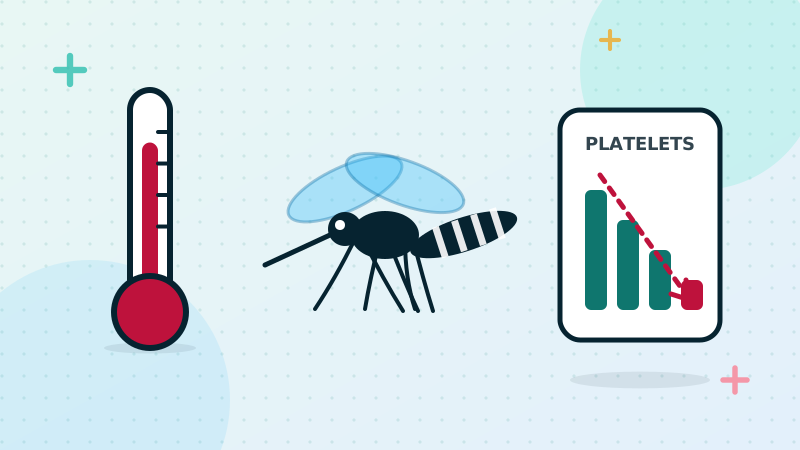
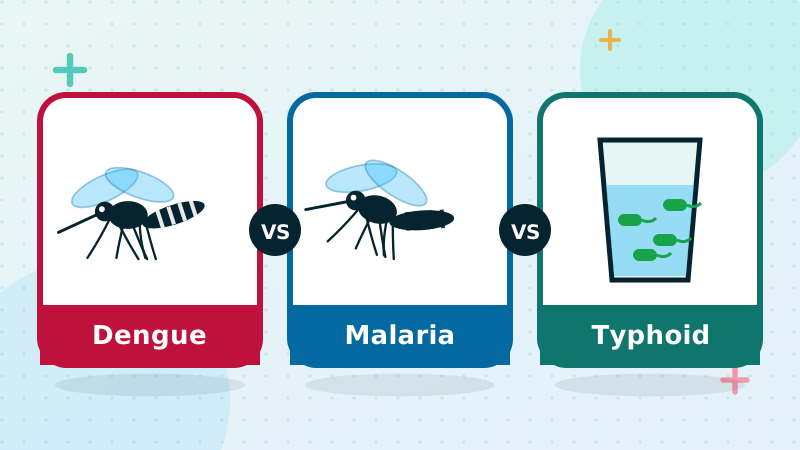
- Dengue, malaria and typhoid can all start with high fever, but their patterns, tests and treatments are very different.
- Dengue: sudden fever with severe body and joint pain; diagnosed with NS1 (early) or IgM (later); no antibiotics.
- Malaria: fever with chills and sweating, often in cycles; diagnosed with a blood smear or rapid test; treated with antimalarials.
- Typhoid: fever that rises gradually over days, with abdominal discomfort; blood culture is the best test early; treated with antibiotics.
- The Widal test alone is unreliable, especially in the first week — avoid self-medicating with antibiotics before testing.
Why fever in Kolkata needs a proper diagnosis
Kolkata’s climate supports several infections that all begin with fever. In the first two or three days, dengue, malaria, typhoid, chikungunya, leptospirosis, scrub typhus and ordinary viral fevers can look remarkably similar. Yet each is treated differently — and some can become serious quickly. Taking antibiotics “just in case”, a very common practice, can mask typhoid, make diagnosis harder and contribute to antibiotic resistance, while doing nothing for dengue or malaria.
The key to getting it right is a careful history, a thorough examination, and the right test at the right time.
| Feature | Dengue | Malaria | Typhoid (enteric fever) |
|---|---|---|---|
| Cause | Dengue virus (Aedes mosquito) | Plasmodium parasite (Anopheles mosquito) | Salmonella Typhi bacteria (contaminated food/water) |
| Onset | Sudden high fever | Fever with chills and rigors | Gradual, rising over several days |
| Fever pattern | High for 2–7 days, then falls | Can come in cycles with sweating | Persistent, step-ladder rise |
| Typical symptoms | Severe body/joint pain, pain behind eyes, rash | Chills, shivering, sweating, headache | Abdominal pain, constipation or diarrhoea, loss of appetite, coated tongue |
| Key early test | NS1 antigen (days 1–5) | Blood smear or rapid antigen test | Blood culture (first week) |
| Later test | Dengue IgM (from ~day 5) | Repeat smear if negative and suspicion high | Widal (limited value), cultures |
| Treatment | Supportive: fluids, paracetamol; no antibiotics | Antimalarial medicines | Antibiotics guided by sensitivity |
| Danger signs | Warning signs around fever fall | Confusion, jaundice, low urine, breathlessness | Severe abdominal pain, bleeding, confusion |
Source: General clinical features; individual cases vary
Dengue: sudden fever and severe body ache
Dengue typically starts abruptly with high fever, intense headache, pain behind the eyes and severe muscle and joint pain. A rash may appear. The most important time is when the fever starts to settle, often around days 3–7, when a minority of patients develop warning signs such as abdominal pain, persistent vomiting, bleeding or drowsiness. Antibiotics have no role; treatment is fluids, paracetamol and close monitoring. Read our detailed dengue guide.
Malaria: chills, sweats and cycles of fever
Malaria is caused by a parasite that infects red blood cells. Classic symptoms are fever with shivering (rigors), followed by sweating, often accompanied by headache, body ache and tiredness. The fever may come in cycles, though this pattern is not always obvious early on. Plasmodium falciparum malaria can become severe quickly, causing confusion, jaundice, kidney problems, low blood sugar or breathing difficulty, and needs urgent treatment.
Diagnosis is made with a peripheral blood smear or a rapid diagnostic test. If the first test is negative but suspicion remains high, the test is repeated. Treatment uses specific antimalarial medicines, chosen according to the species.
Typhoid: the slow-rising fever
Typhoid (enteric fever) spreads through food or water contaminated with Salmonella Typhi. The fever usually rises gradually over several days, with headache, weakness, loss of appetite, abdominal discomfort, and constipation or diarrhoea. Untreated, it can lead to complications such as intestinal bleeding or perforation in the second or third week.
The best test in the first week is a blood culture, ideally taken before any antibiotics are started. It confirms the diagnosis and shows which antibiotics will work — increasingly important because resistance to older antibiotics is common in South Asia.
View data table
| Item | When |
|---|---|
| Dengue NS1 antigen | Day 1–5 |
| Dengue IgM antibody | Day 5–14 |
| Malaria smear / rapid test | Day 1–14 (any time with fever) |
| Typhoid blood culture | Day 1–7 (best in first week, before antibiotics) |
| Widal test (limited value) | Day 8–14 |
The problem with the Widal test
The Widal test is widely ordered in India, but it has real limitations. It is often negative in the first week of illness, it can be falsely positive because of past infection, vaccination or other infections, and a single result is difficult to interpret. A positive Widal on its own is not enough to diagnose typhoid. Blood culture — and the clinical picture — are far more reliable.
Other causes of fever to keep in mind
Chikungunya (marked joint pains that can last for weeks), influenza and other viral fevers, urinary tract infections, pneumonia, leptospirosis (after exposure to flood water), scrub typhus (sometimes with a small dark scab called an eschar) and tuberculosis (prolonged fever with weight loss) are also seen in Kolkata. Fever lasting more than a week without a diagnosis needs systematic evaluation.
What you should — and shouldn’t — do at home
- Do drink plenty of fluids and rest.
- Do use paracetamol for fever, in the dose advised.
- Don’t take ibuprofen, aspirin or other painkillers when dengue is possible.
- Don’t start antibiotics on your own — they can hide typhoid and won’t help viral fevers.
- Do note the pattern: when the fever started, how high it goes, chills, rash, and stomach symptoms. This helps your doctor.
| Myth | Fact |
|---|---|
| A positive Widal test confirms typhoid | Widal can be falsely positive; blood culture and the clinical picture are more reliable |
| Every fever needs an antibiotic injection | Most fevers are viral; unnecessary antibiotics cause side effects and resistance |
| Malaria only happens in rural areas | Malaria is also reported in urban areas, including parts of Kolkata |
| If the first malaria test is negative, it is not malaria | A repeat test may be needed if symptoms continue and suspicion is high |
Preventing typhoid, dengue and malaria
- Typhoid: drink safe, boiled or filtered water; avoid raw street food and cut fruit left open; wash hands before eating. Typhoid vaccines are available — ask your doctor whether they suit you.
- Dengue and malaria: prevent mosquito breeding at home, use nets and repellents, and wear covering clothing. Aedes (dengue) mosquitoes bite in the daytime; Anopheles (malaria) mosquitoes bite mostly at night.
Specialist expertise in tropical fevers
Dr. Dhiman Sen holds a Diploma in Tropical Medicine & Hygiene (DTM&H) in addition to his MD, MRCP and FRCP, and has diagnosed and treated tropical fevers in Kolkata for 50 years. He chooses tests according to the day and pattern of illness, avoids unnecessary antibiotics, and recognises early when hospital care is needed.
Frequently asked questions
How can I tell if my fever is dengue or typhoid?
Dengue usually begins suddenly with high fever and severe body and joint pains, while typhoid tends to rise gradually over several days with abdominal symptoms. Symptoms overlap, so the diagnosis should be confirmed with tests chosen by a doctor.
Is the Widal test enough to diagnose typhoid?
No. The Widal test is often negative early and can be falsely positive. Blood culture in the first week, taken before antibiotics, is the most reliable test.
Can malaria and dengue happen together?
Yes, co-infection is possible in areas where both are common, including Kolkata. This is one reason doctors may test for both when the picture is unclear.
Which fever is most dangerous?
Any of them can become serious. Severe dengue, falciparum malaria and complicated typhoid are all potentially life-threatening, which is why warning signs and early medical assessment matter.
Should I take antibiotics for fever?
Not without a doctor’s advice. Most fevers are viral and do not need antibiotics, and taking them before tests can make typhoid harder to diagnose.
How long does typhoid fever last?
With appropriate antibiotics, fever usually settles within about a week, although tiredness can last longer. Completing the full course is important to prevent relapse.

About the practice
Dr. Dhiman Sen (MBBS, DTM&H, MD (Kolkata), MRCP (London), FRCP (Edinburgh), FICP) is a senior consultant physician in internal medicine in Kolkata with 50 years of experience — Director of Internal Medicine at Manipal Hospital, EM Bypass, and former Head of Medicine at Apollo Multispecialty Hospitals. Read his profile.
Sources and further reading
- National Center for Vector Borne Diseases Control (NCVBDC) — malaria and dengue guidelines
- World Health Organization — Typhoid and Malaria fact sheets
- Indian Council of Medical Research — guidance on enteric fever diagnosis
This article is general health information, not a substitute for a medical consultation. In an emergency, go to the nearest hospital.